
PopAi AI Sheets: review, pricing and alternatives

What is PopAi AI Sheets?
When I first encountered PopAi AI Sheets, I understood it as a specialized component within the broader PopAi ecosystem. At its core, PopAi positions itself as an all-in-one AI workspace designed to streamline various productivity tasks, from document interaction to generating presentations. PopAi AI Sheets, specifically, focuses on the data and spreadsheet aspect, aiming to be an intelligent editor and data extraction tool.
Its primary role is to act as an AI-powered assistant for handling structured and unstructured data, particularly when that data is embedded within documents. Think of it as a smart assistant that can look at a research paper, a PDF report, or even raw text, and intelligently pull out specific pieces of information, organizing them into a usable format, typically a table or a chart. This capability is deeply integrated with PopAi's other features, meaning that the data extracted can then be used to inform a presentation generated by the main PopAi tool, or simply to summarize complex documents.
So, while the broader PopAi platform helps you chat with PDFs, create AI presentations, and generate images, PopAi AI Sheets hones in on the analytical side. It’s about transforming dense information into digestible, visual, or tabular formats. It’s not just a standalone spreadsheet application; rather, it’s an intelligent layer that sits on top of your documents and data, designed to make sense of them quickly and convert them into actionable insights or comparative views.
In essence, it serves as a bridge between raw information and organized data, making it a valuable tool for anyone who frequently deals with large volumes of text or numerical data that needs structuring or visualization without manual effort. It promises to cut down the time spent on data entry and organization, allowing users to move straight to analysis or presentation.
Core Features for Data & Documents
Diving into the specific capabilities of PopAi AI Sheets, I found its strengths primarily lie in its ability to interact with various document types and extract meaningful data. One of the most frequently lauded features, and something I found genuinely impressive, is its capacity for handling literature reviews. You can upload multiple research papers, and the AI is designed to extract key methodologies and results, then compile them into a comparative table. This is a significant time-saver for academics, students, or anyone needing to synthesize information across numerous sources.
Beyond academic papers, PopAi AI Sheets can transform various forms of raw data into visual formats. This means if you have a dataset, it can process it and generate charts instantly. The idea is to bypass the manual graphing process, allowing for quick visualization of trends or patterns. While the quality of these charts can vary, the core functionality of generating them from raw input is certainly present. It aims to make data visualization accessible even to those without advanced data analysis skills.
Another robust feature is its summarization capability. Whether it's a lengthy PDF, a Word document, or even content from a URL, PopAi AI Sheets can distill the main points. This is incredibly useful for quickly grasping the essence of a document without having to read through every page. I found this particularly helpful for initial triage of documents or for getting a quick overview before diving deeper.
The tool is quite versatile in terms of input formats. You're not just limited to text prompts. You can upload PDFs, Word documents (.docx), and even provide URLs. This flexibility ensures that most common document types you encounter in research or work can be processed. The AI then works to understand the core message, extract relevant data, and prepare it for either tabular representation, charting, or summarization, depending on your prompt. This multi-format input support is a definite advantage, as it accommodates a wide range of source materials without requiring prior conversion.
How to Use PopAi AI Sheets
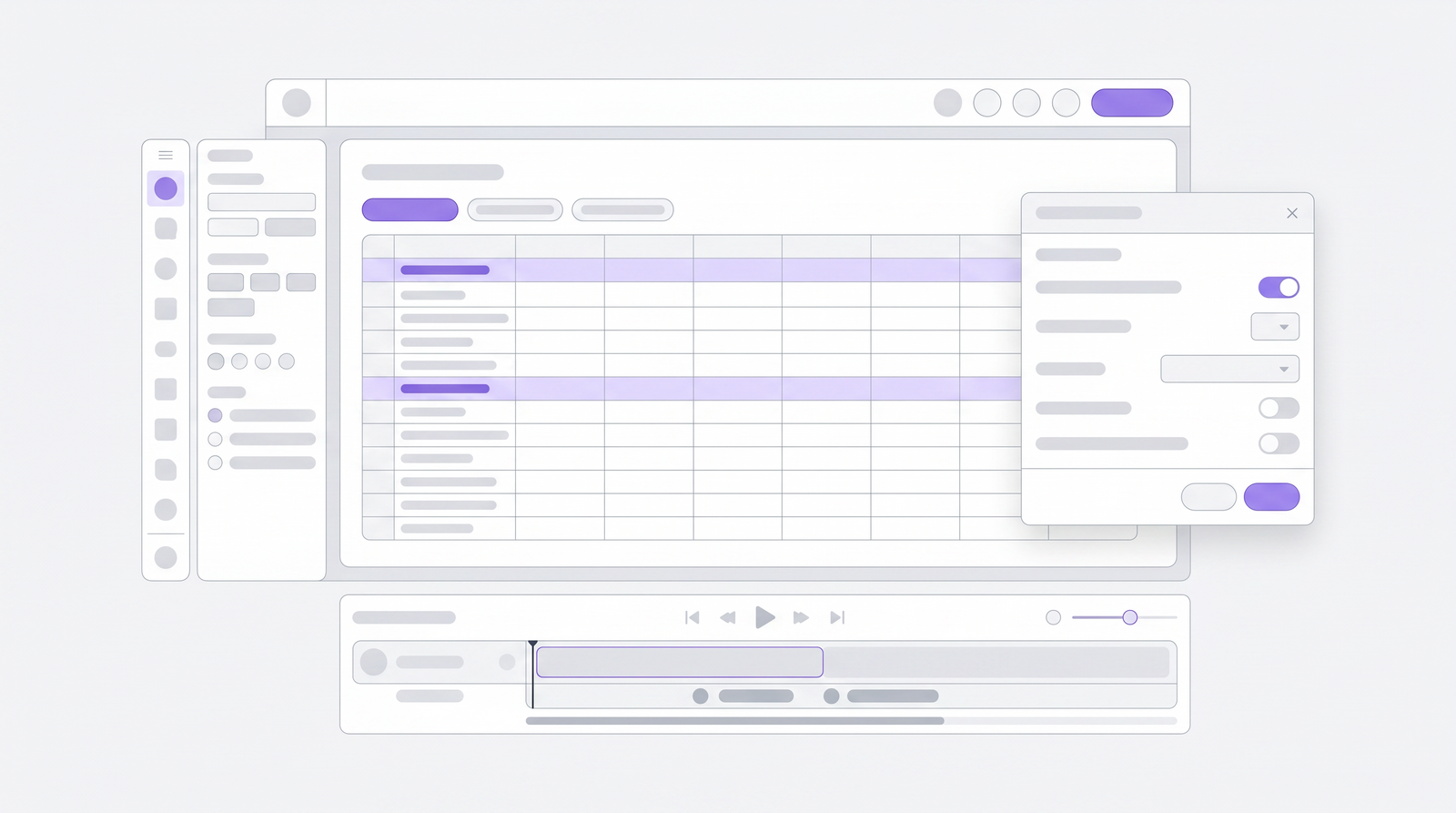
Using PopAi AI Sheets generally follows a straightforward workflow, designed to be intuitive even for new users. The process typically begins with inputting your data or documents. You have a few options here: you can either directly type in your request or prompt, or you can upload various file types such as PDFs, Word documents, or even provide a URL to a web page. For data analysis, you might upload a raw dataset or a spreadsheet to kick things off. The system is built to be flexible with its starting point.
Once you've provided the input, the next step involves giving the AI clear instructions. This is where your prompt plays a crucial role. For instance, if you've uploaded several research papers, your prompt might be, "Extract the methodologies and key findings from these papers and put them into a comparative table." If you've uploaded a dataset, you might ask it to "Generate a bar chart showing the distribution of X variable" or "Summarize the main trends in this data." The clearer your prompt, the more accurate and useful the AI's output tends to be.
After receiving your prompt and input, the AI goes to work, processing the information. This usually happens quite quickly. For data extraction, it will identify the relevant pieces of information and structure them into a table. For charting, it will analyze the data and generate a visual representation. For summarization, it will distill the core content into a concise overview. The generated output is then presented within the PopAi interface, ready for your review.
From there, you usually have options for customization. You might want to tweak the table format, adjust chart labels, or refine the summary. While the extent of customization can vary, the goal is to allow you to make the output truly your own. Finally, once you're satisfied with the results, you can export them. Common export options include standard formats like PPTX (for presentations, often generated by the main PopAi tool based on your extracted data) or PDF, allowing you to integrate the AI-generated content into your existing workflows or share it easily.
Output Quality and Reliability
When it comes to the output quality of PopAi AI Sheets, my experience and what I've gathered from other users present a somewhat mixed picture. On the one hand, for specific data extraction tasks, especially those involving structured information from documents, the tool can be quite effective. I've seen positive feedback, and personally found it capable, for tasks like extracting methodologies and results from research papers into comparative tables. This particular use case seems to be a strong suit, offering a genuine time-saving benefit for literature reviews and similar academic or research-oriented tasks. The ability to quickly get a structured overview of complex documents is a definite plus.
However, the reliability and quality seem to dip when the output expectation shifts towards more polished, professional-grade content, particularly presentations generated by the broader PopAi platform. There's a recurring sentiment among users that while the tool can generate presentations quickly, the quality often leaves much to be desired. Phrases like "subpar product" and "something a high schooler would have created" are not uncommon in reviews. Users report issues with poor formatting, inconsistent design, and a general lack of sophistication that makes the output unsuitable for corporate or client-facing use.
What this suggests is that while PopAi AI Sheets can excel at the raw data processing and extraction part – getting information *into* a structured format – the subsequent transformation of that data into visually appealing or professionally formatted presentations isn't its strongest point. Many users find themselves spending more time editing the AI-generated presentations than they would have if they had started from scratch. This contradiction highlights a critical distinction: it's good at raw data handling and initial organization, but less so at the final, aesthetic, and professional presentation layer.
Therefore, if your primary need is to quickly pull data into tables or generate basic charts for internal review or preliminary analysis, PopAi AI Sheets can be quite reliable. But if you're expecting high-quality, perfectly formatted, and professionally designed final outputs, especially in the form of presentations, you might find yourself disappointed and needing significant manual intervention to meet industry standards. It's a tool that provides speed and initial structure, but not necessarily polish or aesthetic excellence.

Pricing Structure and Billing Concerns
The pricing structure for PopAi, which would encompass its AI Sheets functionality, generally falls within a range of $10 to $20, typically billed on a monthly or annual basis. Like many subscription services, there's usually an incentive to opt for the annual plan, which often presents itself as a more cost-effective option over the long run. However, this is where a significant point of contention and user frustration frequently arises, as detailed in numerous customer reviews.
A recurring complaint centers around what users perceive as misleading billing practices. Many individuals report signing up with the expectation of being charged month-to-month, only to find that they are immediately billed for an entire year upfront. This discrepancy between expectation and reality has led to considerable dissatisfaction and accusations of unclear pricing strategies. For example, a website might display a monthly equivalent price (e.g., "$99/year, billed as $8.25/month"), which can be easily misinterpreted as a true monthly payment option rather than an annual charge broken down for comparison.
This upfront annual charge, especially when unexpected, can be a significant financial burden for some users and has been a major source of negative feedback regarding customer service. When users attempt to get a partial refund or cancel due to this billing issue or dissatisfaction with the product, they often report encountering difficulties, with customer service providing instructions for prospective cancellation rather than addressing the immediate charge. This creates a perception of poor customer support and a lack of transparency.
Therefore, anyone considering PopAi AI Sheets or the broader PopAi service needs to be extremely cautious and thoroughly examine the billing details before committing. It's crucial to confirm whether the displayed monthly price is indeed a true monthly billing option or simply an annual fee amortized. The distinction is vital to avoid unexpected charges and potential frustration.
| Plan | Price (Approx.) | Best for |
|---|---|---|
| PopAi Premium (Monthly) | $10 - $20/month | Individuals needing short-term access or testing the service. |
| PopAi Premium (Annual) | $100 - $200/year (billed upfront) | Users committed for the long term, seeking a lower effective monthly rate. |
Advantages of PopAi AI Sheets
Despite its drawbacks, PopAi AI Sheets offers several compelling advantages, particularly for specific user groups and tasks. One of the most significant benefits I've observed is its capacity for time-saving in data processing and summarization. For anyone who regularly deals with large volumes of text or unstructured data, the ability to quickly extract key information into a comparative table, as seen in literature reviews, is a genuine game-changer. It automates what would otherwise be hours of manual reading, highlighting, and transcribing.
The efficiency it brings to summarizing complex documents is another major plus. Instead of sifting through lengthy PDFs or Word files, you can get a concise overview in moments. This is invaluable for quickly getting up to speed on new topics, preparing for meetings, or simply deciding if a document warrants a deeper read. It acts as a powerful filter, allowing you to focus your attention where it's most needed.
For students, researchers, and even professionals in fields requiring rapid information synthesis, PopAi AI Sheets serves as an excellent learning and research tool. It can help identify patterns, compare different viewpoints, and distill core concepts across multiple sources. This makes it easier to understand complex subjects and build a foundational knowledge base more quickly than traditional methods.
Finally, the tool is generally quite easy to get started with. Its initial use doesn't require a steep learning curve, especially for basic tasks like uploading a document and asking for a summary or a simple table. The interface is designed to be accessible, making it straightforward for individuals and small teams to begin leveraging AI for their document and data needs without extensive training. It's built for quick utility, allowing users to jump in and start generating outputs almost immediately.
- Significant time savings in data extraction and document summarization.
- Enhances efficiency for literature reviews and research tasks.
- Acts as a valuable learning aid for complex subjects.
- User-friendly interface for quick adoption and initial use.
Disadvantages and User Criticisms
While PopAi AI Sheets certainly has its moments of utility, it's crucial to acknowledge the significant drawbacks and user criticisms that temper its overall appeal. The most prominent and concerning issue, as I've gathered from numerous user accounts, revolves around its misleading billing practices. Many users report being charged for an entire year upfront despite expecting a monthly subscription, leading to frustration and a feeling of being deceived. This lack of transparency in pricing is a major red flag and has understandably generated a lot of negative sentiment.
Closely tied to the billing issues is the consistent complaint about poor customer service. Users attempting to resolve billing discrepancies or seek refunds often report unhelpful responses, being directed to complicated cancellation processes, or simply not having their concerns adequately addressed. This suggests a significant gap in their customer support infrastructure, which can be incredibly frustrating when dealing with financial matters or product dissatisfaction.
Another substantial criticism, particularly when considering the broader PopAi platform's ability to generate presentations, is the limitation for high-quality professional output. While AI Sheets might excel at data extraction, the subsequent presentation generation often falls short. Reviews describe outputs as "subpar" and "poorly formatted," sometimes resembling the work of a "high schooler" rather than a professional. This means that for corporate, client-facing, or any high-stakes professional use, the AI-generated content frequently requires extensive manual editing, negating much of the promised time-saving benefit.
Furthermore, for larger organizations or teams, PopAi lacks crucial enterprise-grade features. There's no support for brand governance, meaning you can't easily enforce consistent branding across all generated materials. Similarly, it falls short on structured team workflows, making collaboration and standardized processes difficult to implement. This positions PopAi AI Sheets primarily as an individual productivity tool rather than a scalable solution for businesses with specific brand and operational requirements.
Ideal Users and Practical Applications
Considering both its strengths and weaknesses, PopAi AI Sheets is best suited for a specific demographic and a particular set of use cases. I'd primarily identify individuals, students, freelancers, and small teams as its ideal users. These groups often operate on tighter budgets or have less stringent requirements for enterprise-level features like brand governance or complex team workflows. They are typically looking for tools that can provide quick, functional assistance rather than highly polished, custom-branded outputs.
For students, its utility as a learning tool is significant. Imagine needing to understand a complex topic quickly or consolidate information from several online articles for a research project. PopAi AI Sheets can summarize these documents efficiently, helping to create study notes or preliminary outlines without hours of manual reading. This is where its ability to interact with PDFs and URLs really shines.
In the realm of research, particularly for academics or analysts, it excels in literature reviews. The ability to upload dozens of research papers and have the AI extract methodologies and results into a comparative table is a massive time-saver. It provides a quick overview of existing research, helping to identify gaps or common themes without deep-diving into every single paper initially. This makes it an effective tool for the early stages of research or for staying updated in a field.
Freelancers or small business owners might find it useful for quick data overviews or basic content creation. If you need to quickly understand a client's report, or transform some raw data into a basic chart for internal discussion, PopAi AI Sheets can provide that immediate utility. It's less about creating a final, client-ready presentation and more about generating a first draft or an internal working document rapidly. It's a tool for efficiency in generating initial content or understanding information, rather than for producing final, high-stakes deliverables.
Comparison with Alternatives
When placing PopAi AI Sheets within the broader landscape of AI tools, it occupies an interesting niche. For general AI capabilities like summarization and content generation, it naturally competes with more established and versatile platforms such as ChatGPT or Notion AI. While ChatGPT excels at conversational AI and generating diverse text formats, and Notion AI integrates seamlessly into a workspace for organization and content creation, PopAi AI Sheets focuses more specifically on structured data extraction into tables and basic charting from documents. It's less about creative writing or deep conversational interaction and more about transforming existing information into a usable data format.
For AI presentation generation, which is a major part of the broader PopAi ecosystem, it faces competition from tools like Beautiful.ai or Gamma AI. These alternatives often emphasize design quality, brand consistency, and more advanced customization options, which is where PopAi sometimes receives criticism for its "subpar" and "poorly formatted" presentation outputs. While PopAi can quickly generate slides from text or documents, the aesthetic and professional polish often trails behind dedicated presentation AI tools.
In the context of spreadsheet-related AI, PopAi AI Sheets isn't a direct competitor to full-fledged AI-powered spreadsheet software like those that integrate AI into Excel or Google Sheets for complex data analysis and modeling. Instead, its strength lies in the initial step of *getting data into* a structured format from unstructured sources, or generating quick visual summaries, rather than performing advanced statistical analysis within a spreadsheet environment. It's more of a data pre-processor and quick visualization tool.
Ultimately, PopAi AI Sheets offers a convenience factor for quick data extraction and document summarization that some general AI tools might require more intricate prompting for. However, for nuanced outputs, professional-grade presentations, or deep data analysis, other specialized tools often provide a more robust and higher-quality experience. You can see how it stacks up against alternatives on Top10k to get a broader perspective on its market position and capabilities compared to similar offerings.
Final Verdict: Is PopAi AI Sheets Worth It?
After a thorough review, my final verdict on PopAi AI Sheets is that its value is highly dependent on your specific needs, expectations, and tolerance for its known limitations. On the one hand, it's undeniably a powerful tool for certain tasks, particularly those involving rapid data extraction and document summarization. If your primary goal is to quickly pull out methodologies from research papers into comparative tables, or to get a concise overview of lengthy PDFs and web pages, PopAi AI Sheets can be a significant time-saver and a genuinely useful asset. For students, individual researchers, or freelancers needing quick insights, its efficiency in these areas is a strong selling point.
However, it's crucial to approach PopAi AI Sheets with a clear understanding of its shortcomings. The most prominent concerns revolve around its output quality for professional presentations and, more critically, its billing practices and customer service. If you're expecting to generate high-quality, perfectly formatted, and professionally polished presentations for corporate use, you will likely be disappointed and find yourself investing considerable time in manual edits. This tool excels at providing speed and a first draft, but not necessarily the final, refined product.
Perhaps the biggest caveat is the importance of understanding the billing model before subscribing. The recurring complaints about unexpected annual charges when users anticipated monthly billing are a serious concern. I cannot stress enough the need to meticulously review the subscription terms to avoid financial surprises and potential frustration with customer support if issues arise.
PopAi AI Sheets is a useful tool for rapid data extraction and document summarization, particularly for research and learning, but temper expectations for professional-grade presentation output and scrutinize the billing model carefully.
In conclusion, PopAi AI Sheets is worth considering if you are an individual or small team looking for an efficient way to process and summarize information from documents and raw data, especially for academic or internal purposes. It's a strong learning and research aid. However, if your needs lean towards creating polished, professional presentations, or if you are uncomfortable with potentially ambiguous billing practices and less-than-stellar customer service, you might be better served by exploring alternative solutions that offer more transparency and higher-quality output in those specific areas. It’s a tool that provides quick utility, but often at the expense of polish and enterprise-level reliability.
Full profile and live ranking: https://top10k.com/ai/popai-sheets
Published by

Top10k Tools is a web-based utility hub offering a wide range of free utilities built to get things done faster.
It spans everything from SEO and coding to file converters, image tools, and handy calculators. Everything works directly online, so you can start in seconds.
The long-term vision is creating a complete library of 10,000 online utilities for work, study, and daily life.
If your work happens online, there's likely a tool that fits. Start using the tools today.
Frequently asked questions
What is PopAi AI Sheets primarily used for?
PopAi AI Sheets is primarily used for extracting structured data, like methodologies and results from research papers, into comparative tables, transforming raw data into charts, and summarizing various document types such as PDFs, Word files, and web pages. It streamlines the process of converting unstructured information into organized data.
Is PopAi AI Sheets free to use?
While PopAi may offer a free trial or a limited free tier, its full functionality, including AI Sheets, typically requires a paid subscription. Users frequently report pricing in the $10-$20 range, often with an annual upfront charge.
What are the common complaints about PopAi AI Sheets?
Common complaints include misleading billing practices (charging a full year upfront instead of monthly), poor customer service, and the subpar quality and formatting of AI-generated presentations, which are often deemed unsuitable for professional or corporate use without extensive manual editing.
Can PopAi AI Sheets create high-quality presentations?
Based on user feedback, PopAi AI Sheets and the broader PopAi platform can generate presentations quickly, but the quality, formatting, and professional polish are often criticized as being low. Users frequently report needing significant manual intervention to make them suitable for professional use.
Who would benefit most from using PopAi AI Sheets?
Ideal users include students, individual researchers, freelancers, and small teams who need to quickly process large volumes of information for literature reviews, quick data overviews, or basic content creation. It's particularly useful for academic tasks and initial information synthesis.
How does PopAi AI Sheets compare to ChatGPT or Notion AI?
PopAi AI Sheets is more specialized in structured data extraction and basic charting from documents, whereas ChatGPT is broader for conversational AI and content generation, and Notion AI integrates AI into a comprehensive workspace. PopAi's focus is less on creative text generation or deep analysis and more on transforming existing document content into organized data.
Are there any hidden costs or billing issues I should be aware of?
Yes, many users have reported being charged for a full year upfront, despite expecting a monthly subscription. It is crucial to carefully read all billing terms and conditions before subscribing to avoid unexpected charges.